
Picking the best sort of window for a hot atmosphere like Dubai is more than just choosing a nice frame. Homes in Dubai endure extreme sun, flying sand, sweltering summer heat and nearly non stop air-conditioning. So the correct window must be heat transfer control, sealed against small dust and working well for many years of extreme climate.
Double glazing is more than just the strongest combination of insulation, dust resistance and value for lots of villas and apartments; it is a solution that many uPVC windows Dubai homeowners opt for. On the other hand, thermally broken aluminium with low-E glass is also extremely effective – particularly in cases where large panes or slender architecture frames are top priorities.
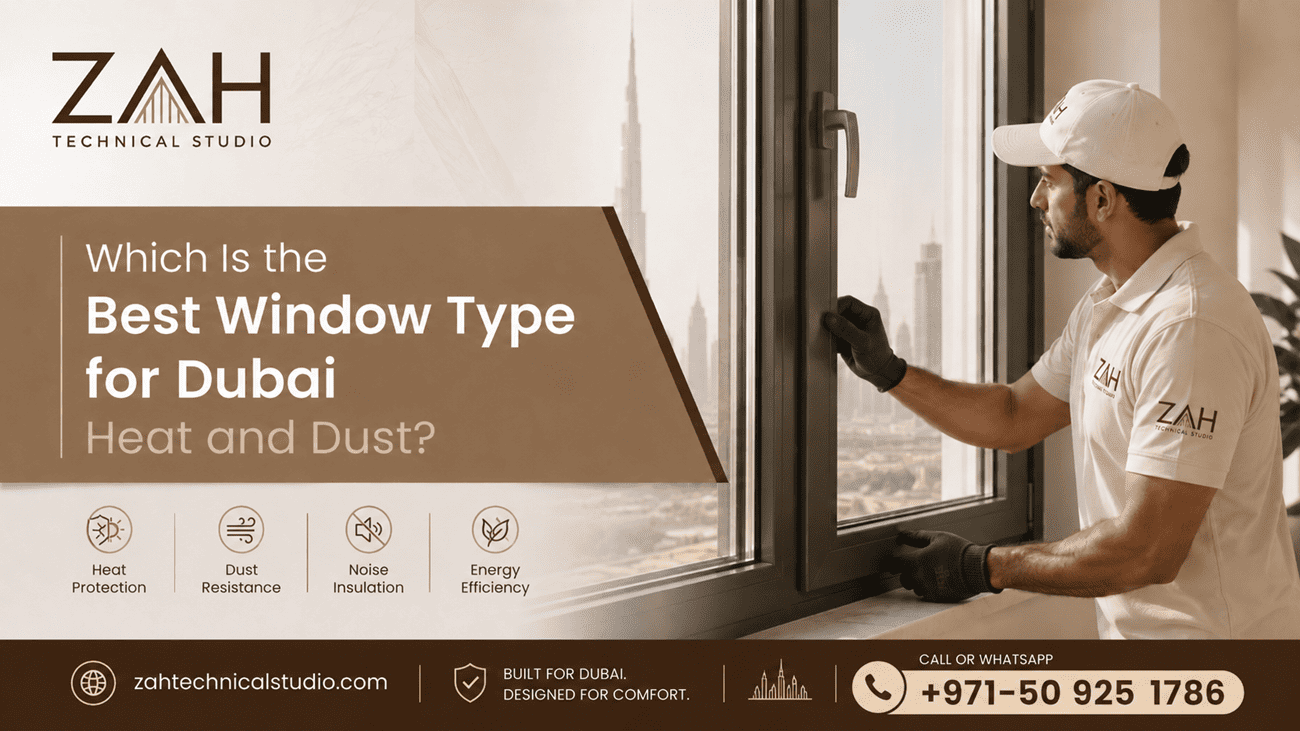
Why Dubai’s Climate Makes Window Selection Critical
A badly done together window, letting directly in sunlight heat while allowing cooled up indoor air out. The A/C stays on longer, it feels warm near the glass in rooms and electricity use may increase.
Dust creates another problem. Finer sand will work its way through loose tracks, worn brushes and around poorly fitted frames. So an authentic dustproof window must have compression seals, quality gaskets and precise fitting — not just heavier glass.
Window insulation UAE properties are only as effective as the total system: frame, glazing, seals, hardware and installation. Put another way: a well-made frame cannot be Saves by using a high-grade glass. Get details on warehouse inferior in sharjah
Top Window Types Suitable for Dubai’s Conditions
uPVC Windows: The Heat-Fighter
Quality uPVC has low thermal conductivity, so it does not transfer outdoor heat as quickly as standard metal framing. Additionally, welded corners and multi-point locking can create a tight seal against warm air and dust.
When combined with insulated glass, heat-resistant windows Dubai properties need become even more effective. uPVC also resists corrosion and requires little more than routine cleaning and occasional hardware adjustment.
However, profile quality matters. Cheap, lightly reinforced uPVC may discolour, distort or struggle with oversized openings. Therefore, buyers should request UV-stabilised profiles, suitable internal reinforcement and hardware rated for local conditions.
Aluminium Frame Windows: Strength Meets Style
Aluminium window frames Dubai architects specify remain popular because aluminium supports wide openings, narrow sightlines and contemporary designs. It also handles heavy glass well.
Standard aluminium, however, conducts heat. Therefore, homeowners should opt for a thermally broken aluminium instead of a simple hollow frame. The interior and exterior metal sections are separated by a thermal barrier that limits heat transfer.
Aluminum is suited for large villa windows, balcony doors and facades typical of commercial. Conversely, when both systems feature high-performance glazing and premium seals, it typically costs more than basic uPVC. Looking for a aluminium fabrication in sharjah
Double-Glazed and Low-E Glass Windows
Double-glazed windows UAE homes use contain two glass panes separated by a sealed space. This construction slows heat movement and can reduce outside noise. Therefore, it works especially well beside busy roads, construction zones and active neighbourhoods.
A low-emissivity coating adds another layer of performance. Low-E glass Dubai installations can reduce solar heat gain while preserving useful daylight. Moreover, laminated acoustic glass can improve soundproof windows UAE performance where traffic or aircraft noise creates a concern.
Some homeowners choose tinted glass windows Dubai properties for privacy and glare reduction. Tint can help, although the tint shade and glass compatibility need professional assessment. Darker does not automatically mean cooler. Get details on interior wood work in sharjah
How to Choose: A Quick Comparison Table
The figures below represent broad supply-and-installation estimates per square metre. Actual quotations vary according to size, opening style, glass thickness, hardware, access and project quantity.
|
Window Type |
Heat Resistance |
Dust Sealing |
Energy Efficiency |
Cost Range (AED/m²) |
Maintenance Level |
Best For |
|
uPVC double-glazed |
★★★★★ |
★★★★★ |
High |
900–1,600 |
Low |
Villas, bedrooms and family homes |
|
Aluminium + low-E glass |
★★★★★ |
★★★★☆ |
High |
1,200–2,200 |
Low–Medium |
Large openings and modern façades |
|
Timber frame |
★★★☆☆ |
★★★☆☆ |
Medium |
1,400–2,600 |
High |
Climate-controlled feature interiors |
|
Single-pane glass |
★★☆☆☆ |
★★☆☆☆ |
Low |
450–850 |
Low |
Utility rooms or temporary upgrades |
|
Smart tinted glass |
★★★★★ |
★★★★☆ |
High |
2,500–5,000+ |
Medium–High |
Premium villas and smart offices |
Common Mistakes Dubai Homeowners Make
The first mistake involves comparing windows by frame material alone. Glass specification, sealing and installation quality often influence comfort just as much.
Another common error is choosing loose sliding windows for a dust-exposed elevation. Sliding systems look practical; however, hinged or tilt-and-turn designs generally create stronger compression seals.
Homeowners also focus on glass colour instead of measurable performance. Ask about U-value, solar heat gain, spacer type and low-E coating. Technical? A little. Yet these details reveal far more than a salesperson saying the glass is “heatproof.”
Finally, do not ignore the installation joint. Gaps between the frame and wall can undermine otherwise excellent dust-proof windows UAE properties need.
Related Services:
» frameless glass work in sharjah
» villa interior fit out company in sharjah
» Wood Furniture Work in Sharjah
» office interior fit out company in sharjah
ZAH Technical Studio’s Recommendation
For most Dubai villas and apartments, ZAH Technical Studio recommends UV-stabilised uPVC frames with double glazing and low-E glass. This combination provides reliable thermal insulation, strong dust sealing and manageable maintenance.
For oversized openings or a slimmer luxury finish, thermally broken aluminium with low-E double glazing offers the better structural option. Meanwhile, west-facing rooms may benefit from carefully selected solar-control glass.
Ultimately, the best energy-efficient windows Dubai residents can install depend on elevation, opening size, noise exposure and budget. ZAH Technical Studio can assess these details, recommend the correct system and manage professional window supply and installation across Dubai.
FAQs: Which Is the Best Window Type for Dubai Heat and Dust?
A double-glazed and optionally equipped with a low-E-covered uPVC window offer one of the best matches for homes in Dubai. The uPVC frame is reduced heat transfer as the insulated glass limits excessive solar gain. For very large openings it is possible that thermally broken aluminium with low-E double glazing provides comparable performance in a much more rigid system.
uPVC is often a better natural insulator and may be cheaper than thermally broken aluminium. Aluminium, on the other hand, provides thinner frames; outstanding rigidity and supports even larger panes of glass. That is why uPVC is usually suited for standard house windows while thermally broken aluminium do better jobs on wide doors, tall panes and modern architectural designs.
As double glazing has a smaller surface area, it is mainly used to reduce unwanted heat transfer and keep rooms warm or cool throughout the year. As a result, the air conditioner runs less often. Real savings vary with the area, orientation, glass finish, frame make up and insulation of buildings. Most significant comfort improvements will occur in west facing rooms and houses with large glass surfaces or poorly insulated walls.
Dust resistant windows employ tight gaskets, multi-point locks, sealed corners and frames that are accurately fitted. Hinged windows compress against the seal, so they’re better at keeping out fine dust than loose sliding systems. So does rolling dusts off the track, and replacing brushes or rubber seals when they get worn.
Low-E glass has a thin coating that allows daylight to pass through but not radiant heat transfer. It helps in Dubai to reduce solar heat gain through the window, so enhancing indoor comfort. It works best when the operators use it in a correctly defined double-glazed device and not as an individual unit.
Standard uPVC double glazing starts from about AED 900 per-square-metre for energy-efficient windows. Low-E glass with thermally broken aluminium possibly from around AED 1,200 to AED 2,200 per square meter Nonetheless, style of opening, geographical area and dimensions glass thickness in such aspects as accessibility hardware and removal work can greatly affect the final price.
Yes. Well-insulated frames and solar-control glazing reduce the rate at which outdoor heat enters a room. However, windows form only one part of the building envelope. Roof insulation, wall construction, air leakage, curtains and room orientation also affect indoor temperature. A complete site assessment gives the most accurate expectation.
Low-E double – glazing or solar-control features if using laminated glass offer good protection from the heating and UV exposure. Furthermore, proper application of architectural window film can enhance the glass already present. Some high absorbance films can cause significant thermal stress in specific insulated glass units, making the importance of checking film compatibility with the installer first paramount.
Homeowners are expected to clean visible tracks and check seals every three to six months. They also need to inspect the locks, rollers, drainage holes and hinges at least annually. For example, the accumulated sand caused by construction work, in desert edges or busy roads will hinder rollers and make it impossible to close them tightly — which obliges more cleaning of these attributes.
For residential window tinting, this is usually not an issue; however, visible changes to the exterior façade of apartment buildings and managed villa communities may be limited. So get written approvals from the owner, building management or community association before installing reflectance or colour-change film. Interior films that retain the external appearance often have less restrictions.
With high-quality coating, hardware and installation powder-coated aluminium provides excellent structural durability. Good quality UV-stabilised uPVC has a long, near-zero maintenance life too. Which is better depends on the size of your windowU-PVC Home windows function splendid for regular home openings, but while you need huge spans an uPVC alternative can best go to date.
Yes. ZAH Technical Studio provides window consultation, supply and installation for Dubai villas, apartments, offices and renovation projects. The team can assess heat exposure, dust entry, opening dimensions, acoustic needs and design preferences before recommending uPVC, aluminium, double-glazed, low-E or solar-control window solutions.